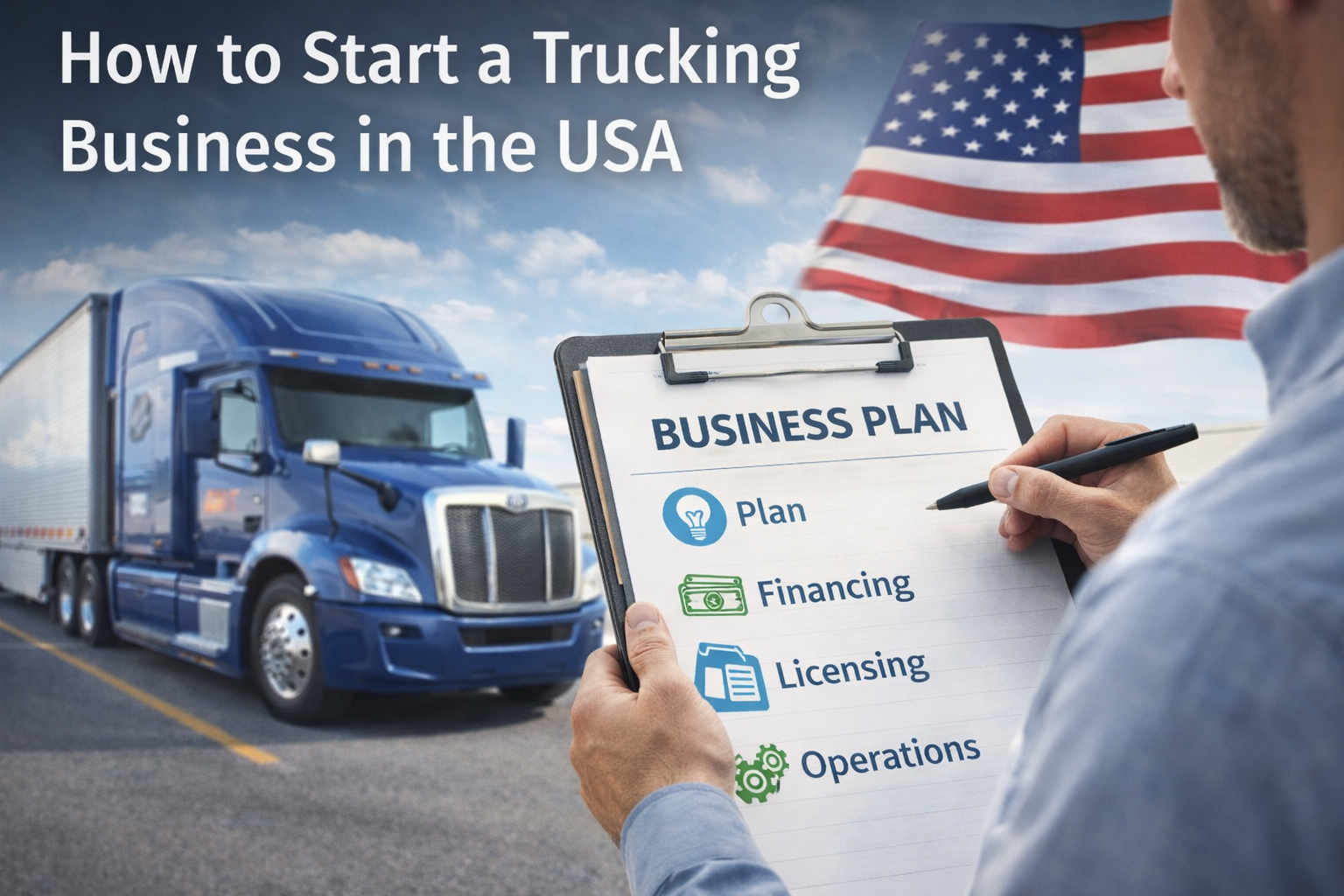
Starting a trucking business involves more than buying a truck and finding loads. Many new owners underestimate the planning required, which can lead to delays, unexpected costs, or compliance issues early on.
Before operating, it’s important to decide what type of business you’re running. Some start as owner-operators, running a single truck, while others plan to grow a small fleet. This decision affects insurance, licensing, and operating costs.
The business must be properly registered at both the state and federal level. This includes forming a legal entity, applying for a DOT number and MC authority, and setting up tax accounts. Insurance is another major requirement and often one of the largest startup expenses.
New trucking companies must also establish compliance systems from day one. Electronic logging devices (ELDs), drug and alcohol testing programs, driver qualification files, and proper recordkeeping are all required before hauling freight.
Understanding these steps early helps prevent costly mistakes and creates a more stable foundation for long-term operations.